
Few tools in World of Warcraft have had as much impact on group culture as the damage meter. By providing real-time data on output, these addons turned “performance” into a measurable, visible, and competitive metric. This guide explores the profound influence of combat logging on how players approach the game, analyzing how the simple act of quantifying performance fundamentally changed the raid environment from a collaborative effort into a results-driven pursuit.
The Quantification of Skill
Before damage meters were common, success was measured in binary terms: did the boss die or did we wipe? Once players had access to exact data, the criteria shifted. A boss kill was no longer enough; the kill had to be “efficient.” This transparency acted as a massive catalyst for self-improvement. Players could see exactly how much their gear choices, ability usage, and movement speed impacted their final numbers. It introduced a layer of “digital accountability” that made it impossible to hide behind a generic performance level. You either pushed the buttons optimally, or the data told the truth about your output.

However, this shift also changed the psychology of group play. It introduced a layer of subtle competition that exists even within the most “cooperative” guilds. Players began to treat their rotation as a puzzle to be solved for maximum value rather than just a way to contribute to a group goal. This “meter-focused” playstyle created an entire industry of theory-crafting. It forced developers to balance the game more precisely, because if one class was mathematically superior by even a fraction of a percent, the “meters” would highlight it instantly, leading to community-wide pressure for changes. The data made the game more professional, but it also raised the stakes for everyone involved.
The Impact of the Meter
| Shift | Impact on Player Behavior |
|---|---|
| Accountability | Poor play became impossible to ignore. |
| Competitive Optimization | Theory-crafting became a core player activity. |
| Balance Scrutiny | Forced developers to refine class parity. |
| “Performance” Culture | Changed raiding from narrative to results-based. |
The Professionalization of Play
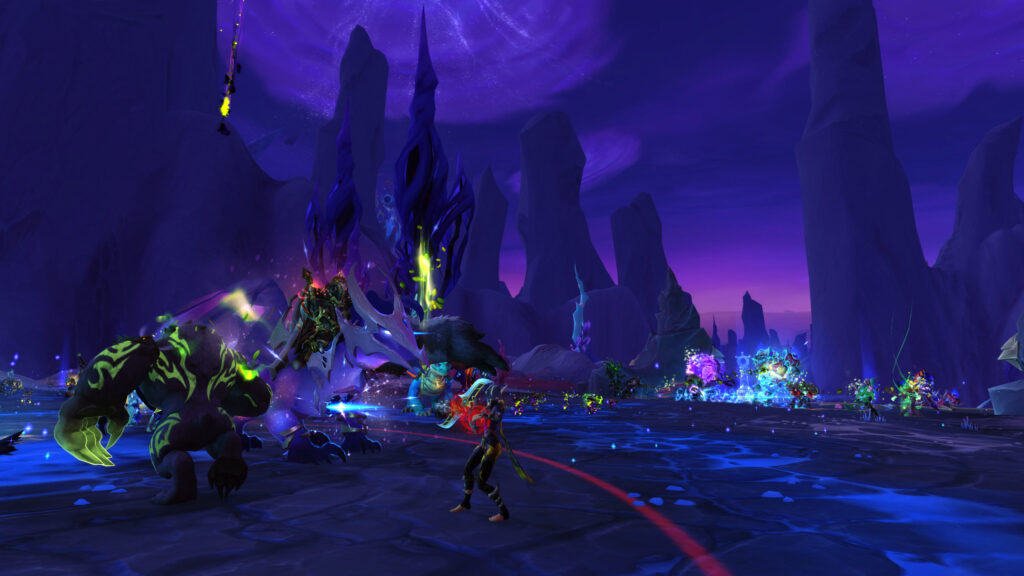
The ultimate result of combat logging and damage meters is the professionalization of the raid environment. It turned the game into something resembling a sport, with clear statistics, rankings, and “best practices.” While some players mourn the loss of a more casual raiding era, it is undeniable that these meters are the reason players today are so much better at the game than they were in 2005. The data gave them a mirror, and for two decades, they have been staring into it, trying to become more efficient, faster, and deadlier.
